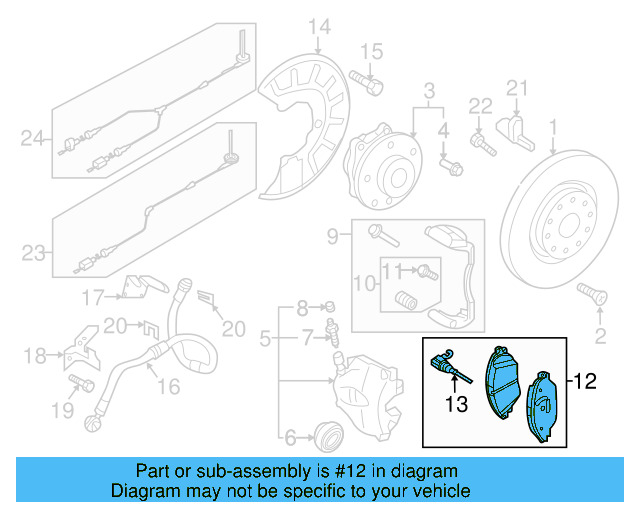
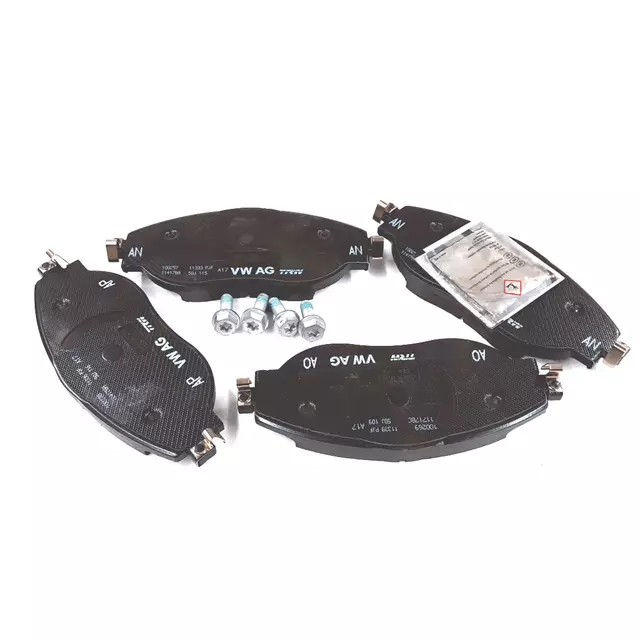
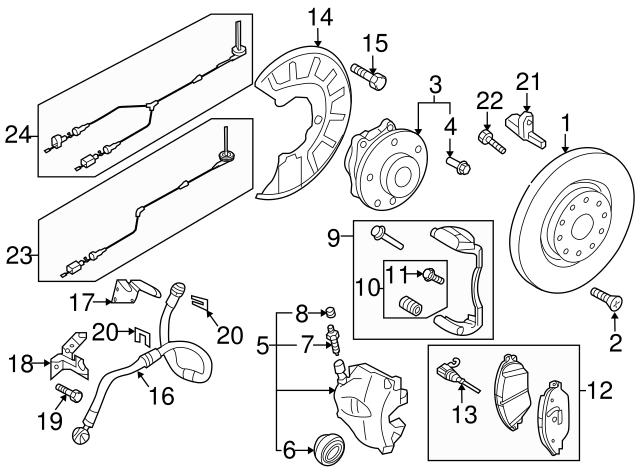
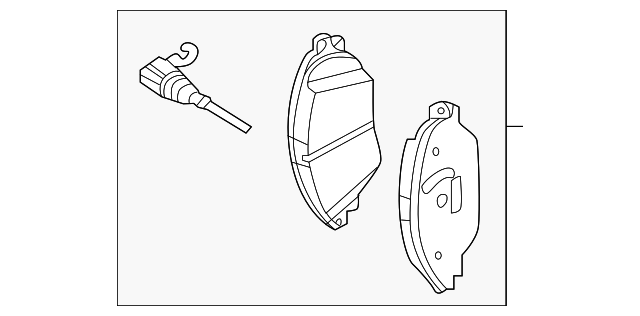
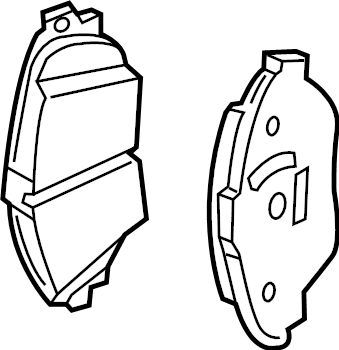
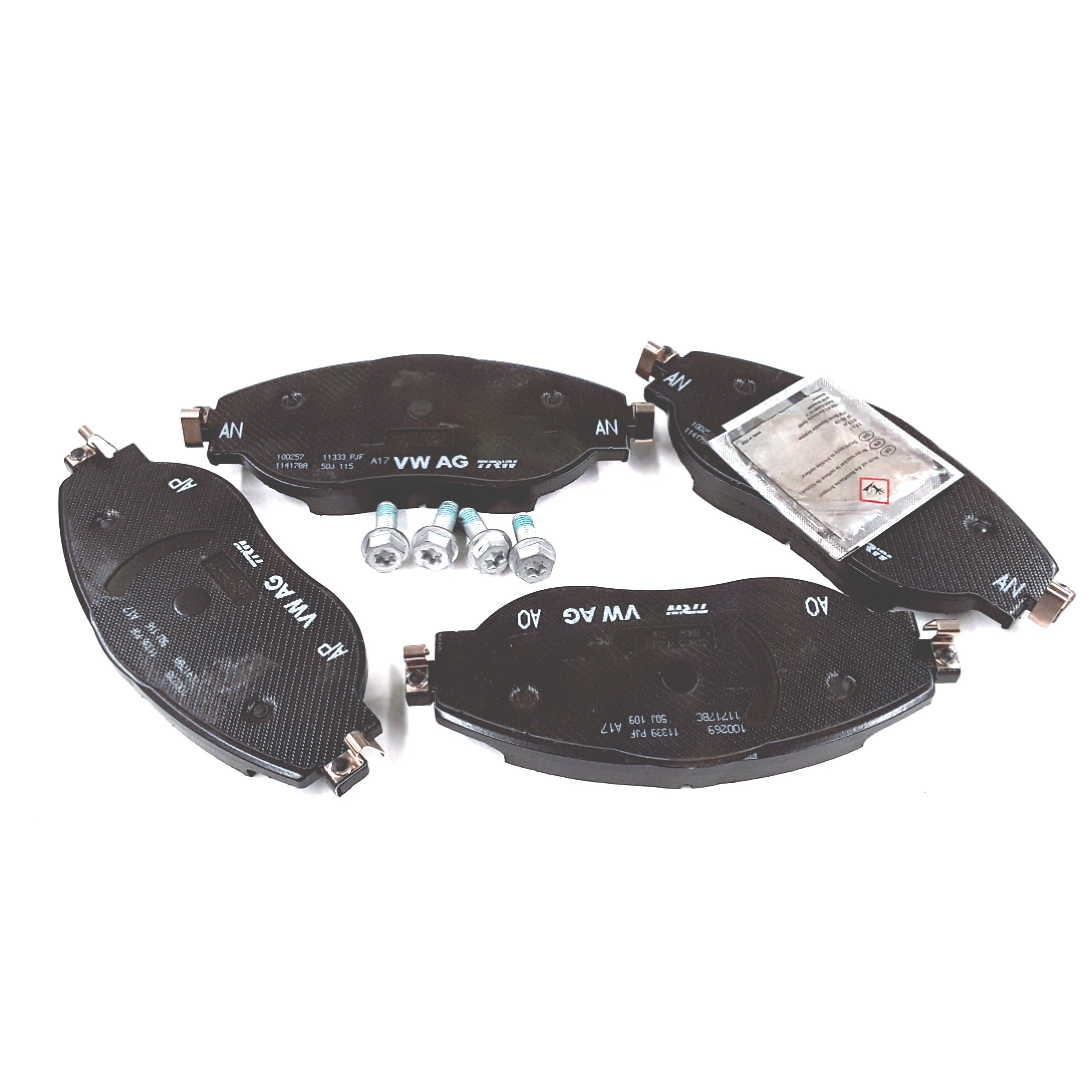
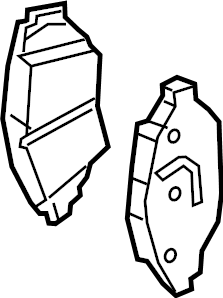
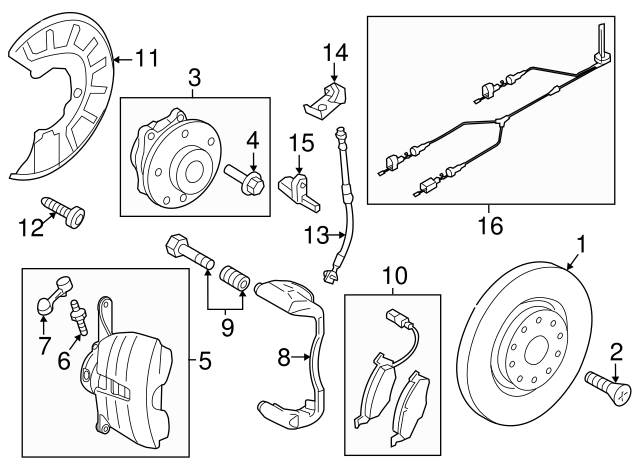
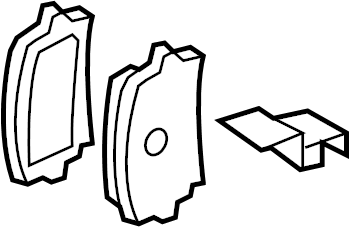
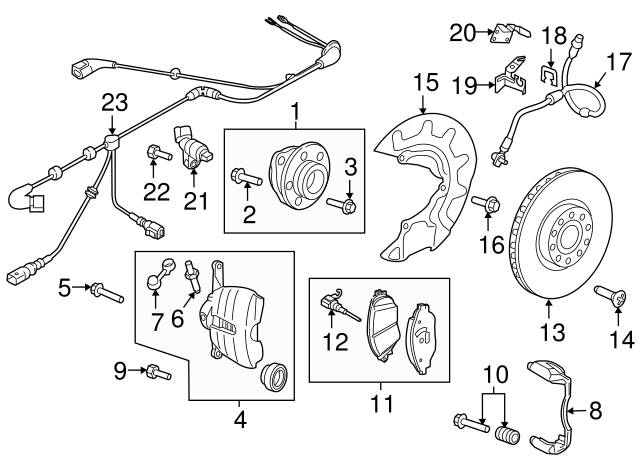
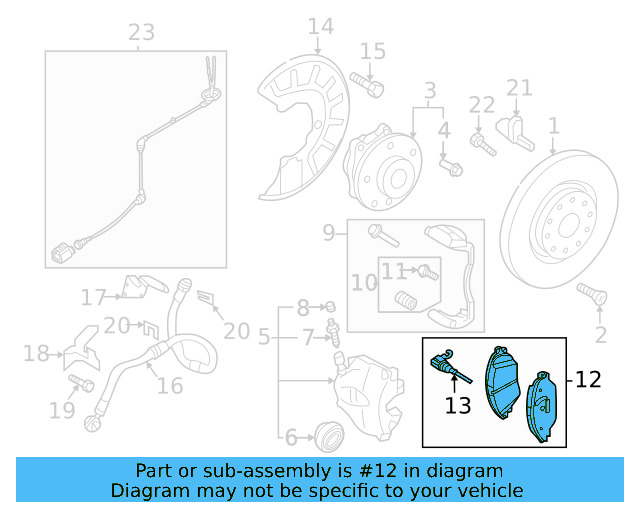
Brake Pads Front 3Q0-698-151
When brake pads wear down, they can lead to compromised stopping power, increased stopping distances, and potential damage to brake rotors. Signs of worn pads include squeaking or grinding noises, a pulsating brake pedal, or a warning light on the dashboard. Regular inspection and timely replacement are crucial to maintaining optimal braking safety.
Choosing the OEM brake pads with part number 3Q0-698-151 ensures that all materials and performance characteristics align with factory specifications. This specific part number is engineered for seamless integration within the braking system, providing reliable performance and reducing the risk of premature wear from inferior alternatives.
Available in Stores
| Seller | Price | Action |
|---|---|---|
|
Leith Volkswagen
Official Dealer
|
— |
| Seller | Price | Action |
|---|---|---|
|
Reydel VW of Linden
New
|
$91 $82 | |
|
Volkswagen
New
|
— |
| Seller | Price | Action |
|---|---|---|
|
me4you_pl
New
|
$22 | |
|
Autoryzowany dealer marki Volkswagen
New
|
$179 | |
|
franciszkanska
New
|
$57 |
| Seller | Price | Action |
|---|---|---|
|
Winn Volkswagen Woodland Hills
New
|
— |
Vehicle Fitment
Vehicles confirmed compatible with this part
No vehicle fitment information available for this part.
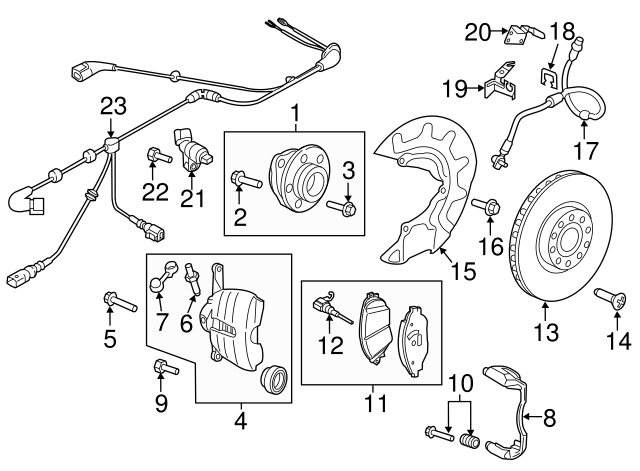
Technical Specifications
| Part Number | 3Q0-698-151 |
|---|---|
| Position | Front Axle |
| Part Type | Brake Pad Set |
| Includes Wear Sensor | Yes (select variants) |
| Engine Compatibility | 2.0L L4 1984cc GAS |
| Superseded Numbers | 3Q0-698-151-C, 3Q0-698-151-H, 3Q0-698-151-K |
| OEM Brand Group | Volkswagen Group (VAG) |
| Dimensions | — |
| Material | High-quality friction composite (OEM specification) |
Manufactured to Volkswagen Group factory tolerances, ensuring consistent stopping power, pedal feel, and rotor compatibility across all listed fitments.
Select variants include a built-in pad wear sensor that triggers a dashboard warning light before pads reach a critically low thickness, helping prevent rotor damage.
Compatible with VW Arteon (2018–2020), VW Jetta GLI (2021–2024), VW Tiguan (2021–2024), and Audi Q3 (2021) — all with 2.0L L4 engines.
Compatible Aftermarket Alternatives
The following aftermarket parts are confirmed direct equivalents for OEM 3Q0-698-151, cross-referenced from major manufacturer catalogs.
| Manufacturer | Part Number | Notes | Dimensions (mm) |
|---|---|---|---|
| Brembo | 3Q0-698-151-E | Premium aftermarket option from a globally recognized brake specialist. Meets or exceeds OEM specifications. Sold via EBS Racing and other distributors. Recommended | — |
| ATE | 3Q0-698-151-E | OE-quality aftermarket equivalent from ATE, a Tier-1 supplier to VAG. Includes wear sensor on applicable variants. Good direct replacement option. | — |
| HELLA Brake Systems | 355031751 | Direct aftermarket equivalent from HELLA, a well-established European OE supplier. Available through German Auto Parts and similar retailers. | — |
Always verify fitment against your VIN before ordering.
How to Replace the Brake Pads Front
Replacing the front brake pads on VW and Audi Group vehicles is a straightforward job for a competent DIYer with basic hand tools and a hydraulic jack. Always work on a flat, stable surface and follow all safety precautions. Replace pads in axle pairs (both left and right sides) to maintain balanced braking.
-
Prepare the Vehicle
Park on a level surface, engage the parking brake, and chock the rear wheels. Gather all necessary tools including a floor jack, jack stands, lug wrench, caliper wind-back tool, and torque wrench.
-
Remove the Wheel
Loosen the front lug bolts slightly while the wheel is still on the ground. Lift the vehicle with a floor jack, place jack stands under the factory jack points, then fully remove the lug bolts and pull the wheel off.
-
Remove the Brake Caliper
Unbolt the brake caliper from its mounting bracket using the appropriate socket. Slide the caliper off the rotor and suspend it with a wire hook or bungee cord — do not let it hang by the brake hose.
-
Remove the Old Brake Pads
Slide the worn brake pads out of the caliper carrier bracket. Note how any anti-squeal shims or hardware is oriented before removing, as these may need to be transferred or replaced.
-
Compress the Caliper Piston
Using a caliper piston wind-back tool (or a C-clamp with an old pad), slowly compress the caliper piston back into its bore to create clearance for the new, thicker pads. Open the brake fluid reservoir cap first to relieve pressure, and monitor fluid level.
-
Install the New Brake Pads
Apply a thin layer of brake caliper grease to the pad contact points on the carrier bracket (not the friction surface). Insert the new 3Q0698151 pads into the caliper bracket. Connect the wear sensor connector if applicable.
-
Reassemble and Torque
Slide the caliper back over the new pads and rotor. Reinstall and torque the caliper bolts to the manufacturer's specification for your specific model. Reinstall the wheel and torque the lug bolts to spec in a star pattern.
-
Bed the New Pads
Lower the vehicle and pump the brake pedal several times until it feels firm. Test in a safe area by performing a series of moderate stops from 30 mph to allow the new pads to bed in properly before returning to normal driving.
Signs of a Worn Part
-
Squealing or Grinding Noise
High-pitched squealing indicates the wear indicator tab contacting the rotor. A grinding sound means the pad friction material is fully depleted and metal-on-metal contact is occurring — replace immediately.
-
Reduced Braking Performance
Noticeably longer stopping distances or a spongy, soft brake pedal feel can indicate worn pads that no longer provide adequate clamping force against the rotor.
-
Vibration or Pulsation Through Pedal
A pulsating sensation felt in the brake pedal during braking may indicate worn or glazed pads, or pads that have caused uneven rotor wear over time.
-
Brake Pad Wear Warning Light
Vehicles equipped with the integrated wear sensor on applicable 3Q0698151 variants will display a dashboard warning light when pad thickness has reached the minimum safe threshold.
-
Visible Low Pad Thickness
During routine inspection, if pad thickness is visibly minimal through the wheel spokes or appears near the rotor surface, replacement is necessary even without other symptoms present.
Replacement Intervals
Volkswagen does not specify a fixed brake pad replacement mileage interval. Replace pads when thickness approaches the manufacturer's minimum specified limit, as confirmed by visual inspection or wear sensor activation.
Frequently Asked Questions
What is the correct OEM part number for these brake pads?
The base OEM part number is 3Q0-698-151. This number has been superseded through several revisions including 3Q0-698-151-C, 3Q0-698-151-H, and 3Q0-698-151-K. When ordering, confirm the current active suffix with your dealer or parts supplier to ensure you receive the latest revision.
Which vehicles are compatible with the 3Q0698151 brake pad set?
Confirmed compatible vehicles include the VW Arteon (2018–2020, SE/SEL/SEL Premium trims, 2.0L), VW Jetta GLI (2021–2024, S and Autobahn trims, 2.0L), VW Tiguan (2021–2024, 2.0L), and Audi Q3 (2021, 2.0L L4). Always verify your exact trim, model year, and engine code before ordering.
Are aftermarket brands like Brembo or ATE safe to use instead of the VW OEM part?
Yes. Brembo and ATE are both Tier-1 OE suppliers that manufacture brake components to factory specifications. Their equivalents (part number 3Q0-698-151-E) are engineered to meet or exceed OEM performance standards and are a reliable alternative to the dealer-sourced part.
Do these brake pads come with a wear sensor?
Select variants of the 3Q0698151 include an integrated disc brake pad wear sensor. Confirm whether your vehicle's braking system uses a wear sensor before ordering, and verify the specific variant (suffix letter) includes the sensor if your vehicle requires it.
Should I replace the brake rotors at the same time as the pads?
It depends on rotor condition. Inspect rotor thickness, scoring, and runout when replacing pads. If rotors are at or near minimum thickness, heavily grooved, or show hot spots, replace them simultaneously. Installing new pads on severely worn rotors reduces braking effectiveness and shortens pad life.
How do I know when to replace these brake pads?
Volkswagen recommends inspection-based replacement rather than a fixed mileage interval. Replace pads when thickness reaches the minimum specified limit, when a squealing wear indicator is heard, when the brake pad warning light illuminates (if sensor-equipped), or when stopping performance is noticeably degraded.
Found an Error?
Help us improve! If you've spotted an error on the site or in the data, let us know and we'll fix it as soon as possible.