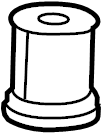
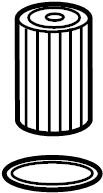
Fuel Filter 7N0-127-177-B
Neglecting the fuel filter can lead to decreased engine power, stalling, and poor fuel economy. Signs of a failing filter include engine misfires, difficulty starting, and unusual engine noises. Addressing these issues promptly can prevent further damage to the fuel system.
Choosing this OEM fuel filter with part number 7N0-127-177-B ensures reliability and performance. It is manufactured to the same high standards as the original part, providing peace of mind that the fuel system will function as intended without the risk of failure associated with generic alternatives.
Available in Stores
| Seller | Price | Action |
|---|---|---|
|
Leith Volkswagen
Official Dealer
|
$79 |
| Seller | Price | Action |
|---|---|---|
|
Volkswagen
New
|
$55 $40 | |
|
Capitol Volkswagen
New
|
$94 |
| Seller | Price | Action |
|---|---|---|
|
Ford-shop
Used
|
$47 | |
|
Infoparts13.com.ua
Used
|
$68 | |
|
Mega Market Auto
Used
|
$47 |
| Seller | Price | Action |
|---|---|---|
|
Volkswagen of Downtown L.A.
New
|
$55 $43 |
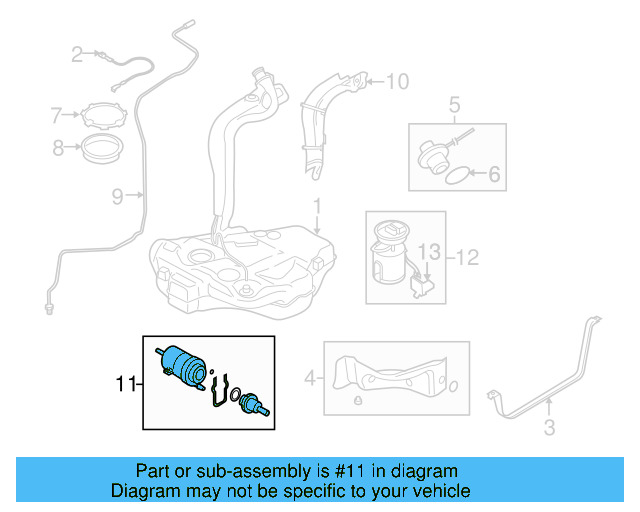
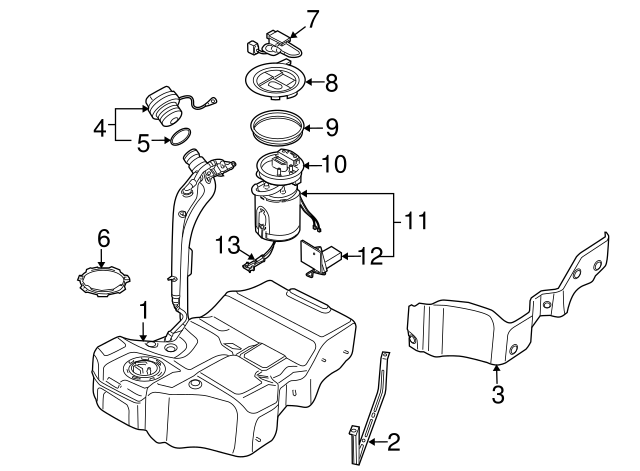
Vehicle Fitment
Vehicles confirmed compatible with this part

Technical Specifications
| Part Number | 7N0127177B |
|---|---|
| Filter Type | Filter Insert / Filter Element |
| Height | ~134 mm |
| Outer Diameter | ~93 mm |
| Inner Diameter | ~14 mm |
| Application | Diesel (TDI) Fuel Systems |
| Thread Size | — |
| Compatible Engine | 2.0L TDI |
| OEM Brand | Volkswagen Group |
Manufactured to Volkswagen Group specifications, this filter element removes fine particulates and contaminants from diesel fuel, protecting sensitive TDI injection components from premature wear.
Fits a wide range of 2.0 TDI models across VW, Audi, SEAT, Škoda, Porsche, and CUPRA platforms, including Tiguan, Passat, Passat CC, Sharan, Q3, and Alhambra applications.
Volkswagen recommends replacement every 20,000 miles or 2 years under standard driving conditions, helping maintain fuel system integrity and optimal engine performance over the long term.
Compatible Aftermarket Alternatives
The following aftermarket parts are confirmed direct equivalents for OEM 7N0-127-177-B, cross-referenced from major manufacturer catalogs.
| Manufacturer | Part Number | Notes | Dimensions (mm) |
|---|---|---|---|
| Mahle | KX 342 | Premium aftermarket replacement from a tier-1 OEM supplier; widely regarded as a top-quality equivalent matching OEM filtration specifications for TDI applications. Recommended | ~134 mm H × ~93 mm OD × ~14 mm ID |
| Febi Bilstein | 101320 | Direct OEM cross-reference from a well-established German aftermarket supplier; confirmed fit for compatible VAG TDI vehicles. | ~134 mm H × ~93 mm OD × ~14 mm ID |
| RIDEX | 9F0090 | Budget-friendly aftermarket alternative with confirmed OEM cross-reference to 7N0127177B; suitable for cost-conscious maintenance intervals. | — |
Always verify fitment against your VIN before ordering.
How to Replace the Fuel Filter
Replacing the 7N0127177B fuel filter element is a straightforward service task on compatible VAG TDI vehicles. The job involves relieving fuel system pressure, accessing and swapping the filter element within the existing housing, and verifying for leaks before returning the vehicle to service. Allow approximately 30–60 minutes and always work in a well-ventilated area away from ignition sources.
-
Safety Preparation
Park the vehicle on a level surface. Disconnect the negative battery terminal to prevent accidental ignition. Put on protective gloves and safety eyewear before beginning any fuel system work.
-
Relieve Fuel System Pressure
Locate and remove the fuel pump fuse from the fuse box. Attempt to start the engine and allow it to run until it stalls from fuel starvation. Turn the ignition off to fully depressurize the fuel system.
-
Access the Fuel Filter Housing
Locate the fuel filter assembly in the engine bay. Remove any engine covers, intake ducting, or other components obstructing clear access to the filter housing.
-
Remove the Old Filter Element
Place an absorbent pad or small drain container beneath the filter housing to catch residual diesel fuel. Disconnect any fuel lines or electrical connectors attached to the housing, then unscrew or unclip the housing cover and carefully extract the old filter element.
-
Install the New Filter Element
Inspect the housing for debris or damaged seals and clean as needed. Insert the new 7N0127177B filter element, ensuring correct orientation. Replace any O-rings or seals if included or if the old ones show wear, then resecure the housing cover to the manufacturer's torque specification.
-
Reconnect Fuel Lines and Fuse
Reattach all fuel lines and electrical connectors to the filter housing, confirming each is fully seated and locked. Reinstall the fuel pump fuse and reconnect the negative battery terminal.
-
Prime the Fuel System and Check for Leaks
Cycle the ignition key to the 'On' position (without cranking) two to three times, pausing 5–10 seconds each cycle to allow the fuel pump to prime the system. Inspect all connections and the filter housing for any signs of fuel leakage before proceeding.
-
Start Engine and Verify
Start the engine and allow it to idle for several minutes. Monitor the filter housing and fuel line connections for leaks. Confirm smooth idle quality and normal engine operation before reinstalling any removed covers.
Signs of a Worn Part
-
Engine Hesitation or Misfires
A clogged filter element restricts fuel flow to the injectors, causing the engine to stumble, hesitate under acceleration, or produce misfires — especially noticeable at higher RPM loads.
-
Hard Starting or No-Start
Severe filter blockage can reduce fuel pressure below the minimum threshold required to start the TDI engine, resulting in extended cranking times or a complete no-start condition.
-
Reduced Engine Performance
Restricted fuel flow from a degraded filter element causes noticeable loss of power and torque, often most apparent when accelerating under load or at highway speeds.
-
Unusual Engine Noises
Fuel starvation caused by a blocked filter can produce knocking, rattling, or rough running sounds as the high-pressure injection pump struggles to maintain adequate fuel delivery.
-
Check Engine or Fuel System Warning Light
On modern TDI vehicles, a severely restricted fuel filter may trigger fault codes related to low fuel rail pressure, illuminating the check engine or glow plug warning light on the dashboard.
Replacement Intervals
Always defer to the vehicle's official service manual for model- and engine-code-specific intervals. Fuel quality varies significantly by region and can substantially shorten effective filter service life on TDI applications.
Frequently Asked Questions
Is the 7N0127177B a complete fuel filter assembly or just the element?
It is a filter element (insert) only — not a complete assembly. It fits inside an existing fuel filter housing on compatible VAG TDI vehicles. Ensure your vehicle uses a serviceable housing-style filter before purchasing.
Which vehicles is the 7N0127177B compatible with?
This filter element is confirmed to fit 2.0 TDI variants of the VW Passat (2012–2015), VW Tiguan (2007–2018), VW Passat CC (2008–2012), VW Sharan (2010–2015), Audi Q3 (2011–2018), and SEAT Alhambra (2010–2015). Compatibility can vary by specific engine code, so always verify against your vehicle's VIN or service documentation.
Can I use a Mahle KX 342 or Febi 101320 instead of the OEM part?
Yes. Both Mahle KX 342 and Febi Bilstein 101320 are confirmed aftermarket equivalents that cross-reference directly to 7N0127177B. Mahle is particularly recommended as a tier-1 OEM-level supplier. RIDEX 9F0090 is also an option for budget-conscious buyers.
How often should I replace the 7N0127177B fuel filter element?
Volkswagen Group recommends replacement every 20,000 miles or every 2 years under standard driving conditions — whichever comes first. In areas with lower diesel fuel quality or demanding driving conditions, more frequent replacement is advisable.
Do I need to replace O-rings or seals when installing a new filter element?
Yes, it is strongly recommended to replace any O-rings and seals within the filter housing at each service interval. Reusing old, compressed seals is a leading cause of post-replacement fuel leaks. Some aftermarket kits may include replacement seals.
Is this the same part number used by Audi, SEAT, Škoda, and Porsche?
Yes. The part number 7N0127177B is a shared Volkswagen Group OEM number used across VW, Audi, SEAT, Škoda, Porsche, and CUPRA. All brands source and list this identical filter element under the same part number.
Found an Error?
Help us improve! If you've spotted an error on the site or in the data, let us know and we'll fix it as soon as possible.