
 EN
EN
 Deutsch
 polski
 русский
 українська
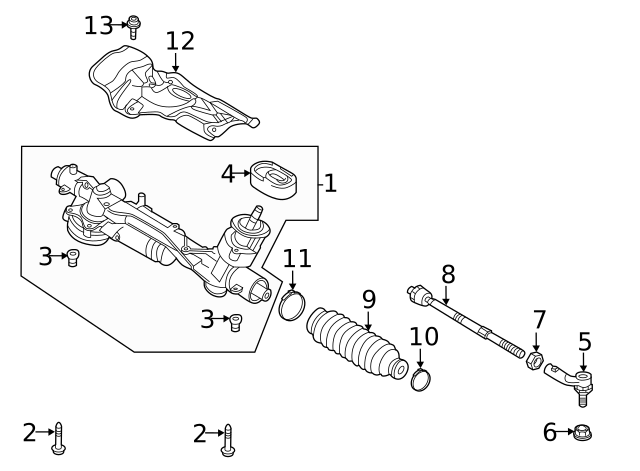
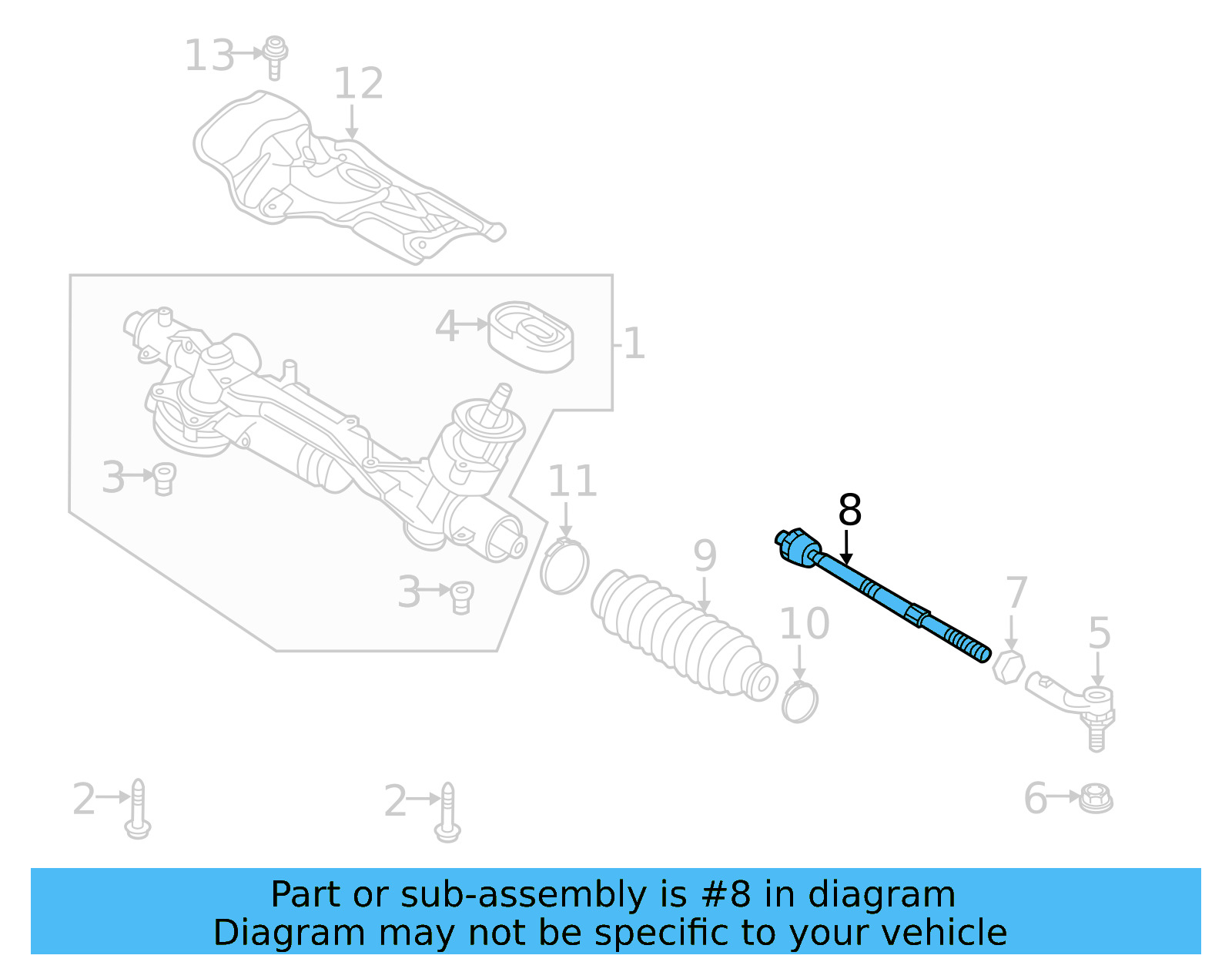
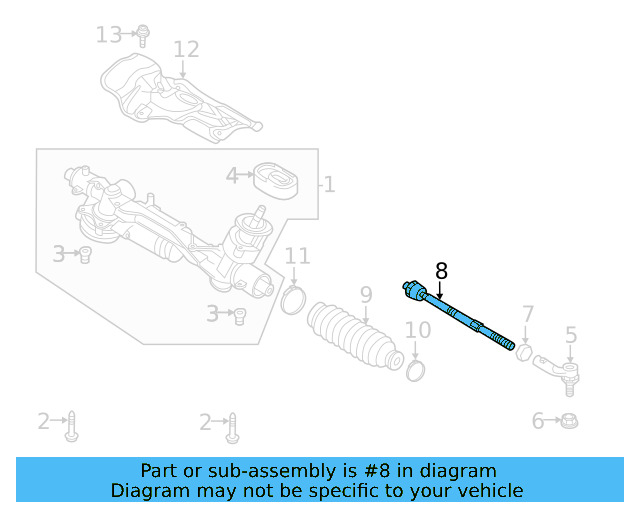
Inner Tie Rod 5Q0-423-810
Available in stores 13 offers
Vehicle fitment 34 vehicles
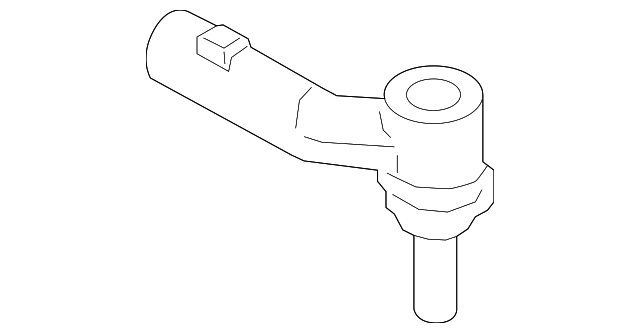
Technical specifications
| Part Number | 5Q0423810 |
|---|---|
| Overall Length | Approx. 350 mm |
| Axle Joint Length | Approx. 330 mm |
| Thread Size | M16x1.5 |
| Shaft Diameter | 17 mm |
| Material | High-strength steel |
| Position | Front axle, left and right |
| OEM Brand Group | Volkswagen Group (VW / Audi / SEAT / Škoda / Cupra / Porsche) |
How to replace the Inner Tie Rod
Replacing the inner tie rod on a Volkswagen Group vehicle requires intermediate to advanced mechanical skill, a dedicated inner tie rod removal tool, and access to the vehicle's service manual for model-specific torque values. A professional wheel alignment must be performed immediately after installation. If you are not confident in your abilities, consult a certified mechanic.
-
Prepare the Vehicle
Park on a level surface and engage the parking brake. Lift the front of the vehicle with a floor jack and secure it on jack stands rated for the vehicle's weight. Remove the front wheel on the side being serviced.
-
Disconnect the Outer Tie Rod End
Using a tie rod end separator or ball joint fork, disconnect the outer tie rod end from the steering knuckle. Loosen the jam nut that connects the inner and outer tie rods, counting and recording the number of turns for reference during reassembly.
-
Remove the Steering Rack Boot
Slide back or remove the clamps securing the steering rack boot (bellows). Pull the boot back along the inner tie rod shaft to fully expose the inner tie rod connection point at the steering rack.
-
Remove the Old Inner Tie Rod
Using a dedicated inner tie rod removal tool, grip the inner tie rod body and unscrew it from the steering rack in a counter-clockwise direction. Take care not to damage the rack threads during removal.
-
Install the New Inner Tie Rod
Apply thread locker to the threads of the new 5Q0423810 inner tie rod. Thread it into the steering rack by hand first, then tighten to the torque specification listed in your vehicle's service manual using the inner tie rod tool.
-
Reinstall the Boot and Outer Tie Rod
Slide the steering rack boot back into position and secure the clamps. Reconnect the outer tie rod, threading it on the same number of turns noted during removal, and tighten the jam nut securely.
-
Reinstall Wheel and Lower Vehicle
Reinstall the wheel and torque the lug bolts to specification in a star pattern. Carefully lower the vehicle off the jack stands and remove the jack.
-
Perform a Professional Wheel Alignment
Drive immediately to a qualified alignment shop. Any inner tie rod replacement disturbs the toe setting; failing to align the vehicle will result in rapid, uneven tire wear and compromised handling.
Signs of a worn part
-
Steering Wheel Play or Looseness
Excessive free movement in the steering wheel before the wheels respond is a primary indicator of a worn inner tie rod with insufficient preload or a damaged ball joint within the rod.
-
Clunking or Knocking When Turning
A worn inner tie rod ball joint produces audible clunking, knocking, or popping noises during steering inputs, especially at low speeds or when parking.
-
Vehicle Pulling to One Side
A failed inner tie rod can cause the vehicle to pull consistently to one side while driving, as the toe angle on that corner is no longer properly maintained.
-
Vibration in the Steering Wheel
Looseness or wear in the inner tie rod can transmit road vibration and harshness directly into the steering wheel, particularly noticeable at highway speeds.
-
Uneven or Excessive Tire Wear
A compromised inner tie rod alters the wheel toe angle, causing abnormal tire wear patterns such as feathering or heavy wear on one edge of the tire tread.
Replacement intervals
There is no scheduled replacement mileage for this part. Replace immediately upon detection of any play, noise, or visible damage during inspection. Always perform a wheel alignment after replacement.
Frequently asked questions
Will part number 5Q0423810 fit both the left and right sides of my vehicle?
This part number is commonly listed as fitting both left and right inner tie rod positions on compatible vehicles. However, always verify against your vehicle's VIN and consult the parts catalogue for your specific model and year before ordering, as some configurations may use different parts per side.
Which vehicles are compatible with OEM part 5Q0423810?
Confirmed compatible vehicles include the Volkswagen Tiguan (2018–2022, 2.0L engines), Volkswagen Passat B7 and B8 (2014–2018), and Audi Q3 (2019 onwards, including 35 TDI, 35 TDI quattro, 35 TFSI, and 2.5 RS quattro variants). It is also used across SEAT, Škoda, Cupra, and Porsche models sharing the same platform. Always verify fitment by VIN.
Can I replace just one inner tie rod, or should I replace both at the same time?
If only one inner tie rod shows wear or damage, replacing just the failed unit is acceptable. However, if both sides show similar mileage and wear, replacing both simultaneously saves labour costs and ensures balanced steering feel. A wheel alignment is required regardless of how many sides are replaced.
Is a wheel alignment mandatory after replacing this inner tie rod?
Yes, a professional wheel alignment is absolutely mandatory after replacing an inner tie rod. The inner tie rod directly controls the toe setting of the wheel. Even a slight positional change will alter toe angle, causing rapid uneven tire wear and affecting straight-line stability if not corrected.
Are the RIDEX (51T0319) and KAMOKA (9020068) aftermarket parts reliable alternatives to the OEM part?
RIDEX part 51T0319 matches the OEM overall length of 350 mm and thread size of M16x1.5, making it a well-specified alternative. The KAMOKA 9020068 also matches the thread size but has a different axle joint length listed (212 mm), so dimensional verification against your specific vehicle is recommended before purchasing. OEM or a reputable aftermarket brand with matching specs are both acceptable choices.
What cross-reference numbers are equivalent to 5Q0423810?
Confirmed equivalent or cross-reference numbers include OEM variants 561-423-810 and 1KD-423-810, as well as aftermarket references TA2903, JAR701, and JAR7657. The RIDEX number is 51T0319 and the KAMOKA number is 9020068. Always verify that any cross-reference part fully matches the dimensional specifications before installation.
Found an error?
Help us improve — if you've spotted an error on the site or in the data, let us know and we'll fix it as soon as possible.